

Nothing Else Matters
The Death of Pure Grit

What I've felt, what I've known
Never shined through in what I've shown
Never be, never see
Won't see what might have been
What I've felt, what I've known
Never shined through in what I've shown
Never free, never me
So I dub thee unforgiven-Metallica
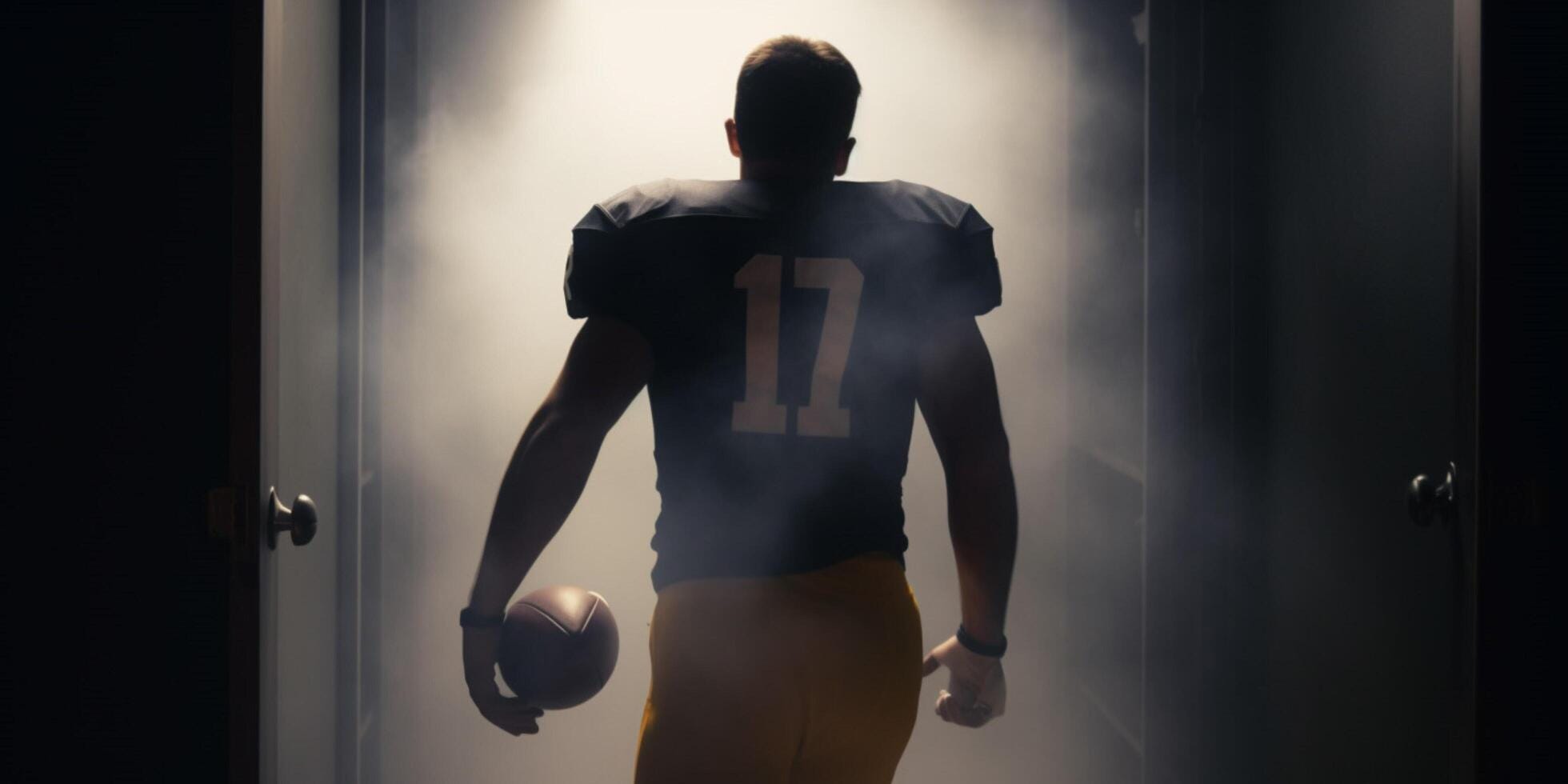
I remember sitting in the living room with my senior teammates, beaten and bruised in the aftermath of a devastating loss that knocked us out of the playoffs. No one spoke for minutes at a time, exhaustion and dejection leaving us just staring off into space, trying to hold ourselves together. If one walked in without any context, he would assume it was a funeral. In a way, it was. None of us were destined for college football. We would never suit up again.
The parents were chatting in the other room; a couple mothers popping in trying to give consolation to their despairing children. Their platitudes fell flat, most of them intrinsically incapable of understanding their son’s mind. It wasn’t their fault. It was like a koala trying to understand the inner world of a lion. The dads knew better than to try. They knew from personal experience pain from that sort of loss can only heal with time, if ever. Some recounted their own devastating defeats, still poignant after decades. Regardless of their station in life, most would give anything for another chance at the glory that slipped away.
We lost a down-to-the-wire game in the regional championship to an opponent that would win State two weeks later. Our offensive end confessed he tripped up on a pass route in the final minutes where he broke away and simply staying on his feet could have led to victory. He brought it up again ten years later like it was yesterday. The play reel in my head constantly came back to where I was inches from swiping the ball away from the unsuspecting quarterback. The rest had their own internal game footage playing, of how being a few milliseconds quicker might have changed things, how they flubbed that maneuver he practiced hundreds of times. The opposing fans gleefully counting down the final seconds of the game still burns in my mind.
We played our hearts out. The other team did as well. Tale as old as time. It was just that little bit that differentiated us. The loss wouldn’t be forgotten by the townsfolk though. They were angry, not at our performance, but at the coaches. They blamed bad play calling and stubbornness for our loss. While uncharitable and childish, with many having a major issue with living vicariously through us, they had a point.
The core philosophy of our program for decades was brutal, relentless, smash-mouth football. We aspired to be more conditioned, more disciplined, and tougher, never giving the enemy a moment to breathe. We kept things simple, the run being our bread-and-butter with the pass only coming out a couple times a game. They emphasized brute force over complicated plays, fundamentals over more advanced maneuvers. They relied on natural farm boy strength along with hitting the weights over complicated protocols. A couple years prior, someone pissed off coach by joking about his “lack of creativity” in playcalling. The next game he called the same down-the-throat play 30 times in a row, crushing his hapless opponent by four touchdowns. There was a lot of pride in that old-time football. While many have hard feelings about his coaching, I have nothing but gratitude. Though he and the rest of the staff had all too human foibles, they were never in it for vainglory and cared for all of us deeply. They were good guys.
Our opponent was the opposite. For small town football, he knew the cutting edge of nutrition, regimented weightlifting programs, and dynamic playcalling. While the kids were not destined for the pros, he got every ounce of worth out of them, showing willingness to embrace what worked before what pleased his sensibilities. He read every one of our plays like a book and stacked the front lines every play. In the end, our coach’s philosophical aversion to passing brought defeat.
While the program was a powerhouse through the decade, we were sticking to a script that was quickly becoming obsolete. We were becoming dinosaurs. Our weightlifting program was hopelessly outdated compared to the latest best practices. Tactics were changing, and the natural power of boys doing farm work through their youth was being supplanted by training with knowledge of advanced kinesiology at their disposal. While hard training and basic grit was still fundamental, it was slowly being replaced with modern sports science.
In subsequent years, the kids starting to follow their own off-season training regimen as their coaches continued falling behind the times. The staff reluctantly started making changes, but it was only when a new head coach was brought in that the program was brought into modernity. The simple smash-mouth farm boy football of the 70’s-90’s fell to the wayside. Things got more complicated. The kids were changing too. Fewer and fewer worked in the fields, the ascent of technology making their labor less needed. Many parents discouraged this sort of dirty jobs in favor of “work” that looked better on college applications. Also, I am told an unfortunate number of farmers hire illegal labor.
Jacques Ellul in “The Technological Society” went into painstaking detail how the age of technique had supplanted all other forms of living. In the quest for the most efficient and effective method of action, whether human or machine, every other mode of being falls to the wayside. There’s no avenue it doesn’t infest, and has permeated the sciences, medicine, and small-town high school football. Football has a list of well-defined rules, rules that allow one to test for optimal outcomes. Given there are two opposing forces working by the same rules, it’s an arms race to find the most effective means to gain superiority on the gridiron, where a single play often determines victory or defeat.
In earlier times, the rules of football were simple, consisting of little more strategy than two gangs beating the shit out of each other until a victor emerged. It was more like a brawl than the complicated, deeply planned tactics seen in modern games, As the rules changed, so did the philosophies as different formations and styles emerged to take advantage of a team’s strengths and weaknesses. It was still a mostly local affair with only basic infrastructure, but as money and prestige raised the stakes, so did the desire to be the best.
It’s well known the enormous amount of capital spent on professional teams. While many college programs make a profit both directly through tickets and indirectly through alumni donations, more and more colleges are willing to lose money for the glory of having a world-class team on their campus. This has only gotten more ludicrous with the player portal, which makes star players more like mercenaries than true students.

At the lowest levels of the game, small villages of a couple thousand residents are willing to spend enormous amounts of time and capital into fielding their teams. Even here, ethically questionable means to snipe a star player from an opposing school, certain forms of “enhancements”, and absurd amounts of hours worked by the coaching staff are prominent. The arms race to give the school, and its athletes, an advantage has formed an increasingly specialized form of training.
In another time during the offseason, a teenager would once wake up at 3:30 to milk cows, head to the school and lift until he’s good and beat, get the rest his morning chores done, then go goof off outside with his buds. Now the player follows a specific protocol, the staff watching over his lifting stats to every minute detail. He has a nutrition plan lined up, and oftentimes players are now expected to participate in “voluntary” practices led by team captains. Instead of a simple playbook learned in hell week before school started, there is now an encyclopedia to memorize to keep track of ever-advancing tactics. Everything is tested, refined, then retested. The staff is practically a bunch of quants poring over data, crunching the numbers, looking for weaknesses to fill.
Once the rhythm of day-to-day life was their core training, with long hours in the field picking up rocks, riding bikes to the boondocks, and pickup games that were more like riots than anything resembling football. There was a force of will juggling country life along with academics, bringing with it natural discipline and grit. Now it has become more systematized. It’s become more efficient.
You see it everywhere.
In baseball, you see kids play almost year-round in travel teams, and in ones that only go six months, the parents have a trainer ready for the rest of the year. Basketball players play so much athletes are getting injuries in their early twenties usually only seen with pros in their twilight years. In academics, absurd amounts of hours are spent going to the right competitions and filling in those right checkboxes for getting into a prime university. Everywhere we look, what was once the natural cycles of youth in Americana has been systematized for maximum efficiency in hopes that those countless hours will give a little extra edge in beating out his competition. And the money is more lucrative than ever.
An avalanche of tutors, trainers, and other experts are now available. As parents have fewer kids and, until recently, significant discretionary income, they wanted to give their kid the best chance possible. Other parents were doing the same, creating a fear of being “left behind” and an arms race to keep up. The kid wouldn’t have his hard knocks learned from getting his head rung in backyard football, but ruthless scheduling leaves him with less and less time for unorganized activities.
While kids in ages past would live a live built organically around their family and wider community duties, the proliferation of technique has given the gift of kids specializing into a field and possibly becoming elite, but at the expense of modes of being that are impossible to quantify. The certain and the numerable has replaced the ad-hoc. Instead of a bunch of kids riding their bikes around town and getting a spur of the moment game together, structured sports are the norm. Instead of a kid getting winded from the natural rough and tumble activities of young boys, it’s through a specific workout regimen, tested and proven.
This isn’t entirely the fault of the parents. The 1990’s likely saw the last gasp of this classic Americana, suffocated by ubiquitous phones and an insufferable nanny state that sees free-roaming kids as a failure of parenting, with the rather rough nature of male hierarchies considered anti-social and immoral. While one could live an honorable middle-class life without much hassle once, the increasing difference in standards of living between the middle-class and the upper-class has created a sense of urgency to be part of that top ten percent necessary to live a comfortable life.
In truth though, many kids wouldn’t go outside at all without these programs, preferring to be glued to their XBox or phones. These apps and games are designed to suck a person’s attention away, and their young minds are no match against the combined force of thousands of psychologists determined to keep their eyes glued to the screen. The increasing structure is also a reaction against the ever-engulfing presence of the technological life.
The kids today have plenty of grit and likely play just as hard as thirty years ago. Now they are bigger, faster, and stronger, the fruits of science and an efficient regimen turning them into something that would have likely wrecked my late 1990’s team. Academically, those with motivation have more opportunities than most anyone in the history of the world had access to, even in the boondocks. For aspiring elites, in every quantifiable level they’re simply better, yet there’s the lingering sense something important was lost, something that’s impossible to put on a spreadsheet. It isn’t nostalgia for times past, nor is it a knee-jerk luddite response to technological changes. Something is different. Something was lost when that rough-and-tumble world of Smear the Queer, King of the Mountain, and feral kids roaming the neighborhoods disappeared. They become units of productivity, whether on the field or in the business world that replaced the sense of place, the bonds that formed by simply letting things come down to chance. They are impressive specimens, capable of great things, yet one can’t help but noticed they’re also caged in, slaves to the same forces that brought them to their grandest heights.
In the modern world, technique and science has cemented its victory over individual gumption. A team coming in with lots of heart gets smashed by the team with the most advanced training protocols, the newest game strategies. It’s more and more become a battle of coaches. Will and gumption aren’t enough anymore. Even farm boys are slaves to technique now.
Before big games, every beat-up car on the way to suiting up would be blasting Metallica in souped up speakers around town, the guttural vocals of James Hetfield echoing through the blocks of the quiet town. “The Black Album” was the soundtrack of this age, and everyone got hyped listening to it. We knew the battle that night would leave us deflated all weekend or in a state of euphoria. Either we would be given a pat on the back for trying hard or get swarmed by horny high-school girls who wanted a piece of our triumph. Win or lose, we would be aching until practice started up again on Monday.
For players in every era, those long two hours battling in that 100-yard field against a relentless opponent would forever shape their identity, prove what they were capable of. It’s why grown-ass coaches burst into tears looking back at those glory days, why they toil hundreds of hours a year ensuring the upcoming generation gets the same experience. It’s that grit deep inside, when snot’s flying from your nose and you’re gasping for air, knowing no reprieve is coming because you play both sides of the ball, and relishing every moment, that you realize you’ve ascended. Even with the never-ending march of progress, there’s that chance to dig deep down and prove who you are. I hope every youth gets that opportunity, that technology doesn’t extinguish that most human part of existence. That the upcoming generation isn’t like the broken “unforgiven” man. Nothing Else Matters.
So close, no matter how far
Couldn’t be much more from the heart
Forever trusting who we are
And nothing else matters-Metallica
Superb essay. As luck would have it, I’m currently putting together an article on sport and cultural identity. It primarily concerns European sports, which obviously have an entirely different structure. I was going to make a note on how I couldn’t really say how my thesis applies to the US, but instead, I think I’ll just link to this piece. Great work.
I boxed when I was young and it was a hard life as you constantly had to make weight and you travelled non stop. There also wasn’t really a season it mostly just went year round so it burns you out over time but it made me a much better man and able to weather a lot of tough times. Boxing helped form the grit you talk about I really rarely used it in an actual fight outside the ring probably because I had the confidence of knowing how to fight and knowing what it felt like to get socked in the face or gut all the time so I didn’t have a fear of it if I needed to fight. The training and lifestyle was tough so it hardened me and let me endure hardship in all walks of life. I never played football but I have a young son now that is starting to play and I have developed a lot of respect for the sport and its ability to impact young men and build character. Your essay just makes me think of the many news stories of coaches being fired on a constant basis and all the transfer portal shenanigans with college players and I constantly wonder how any of these organizations hope to build cohesion and culture over time. You can see the same mentality at the high school and lower levels and to me it defeats the purpose of the sport which is to prepare young men for life and build camaraderie. Organizers want to game out the system to manipulate outcomes that’s where all this “scientific” training and eternal recruitment comes from in order to side step the process of building a cohesive unit of young men that have all paid their dues together and will fight for each other to win on the field. I also think your right that players who have responsibilities outside of the sport are going to be tougher mentally and just more appreciative of the time that they get to play as they can put the sport into a proper context in the grand scheme of their lives.